
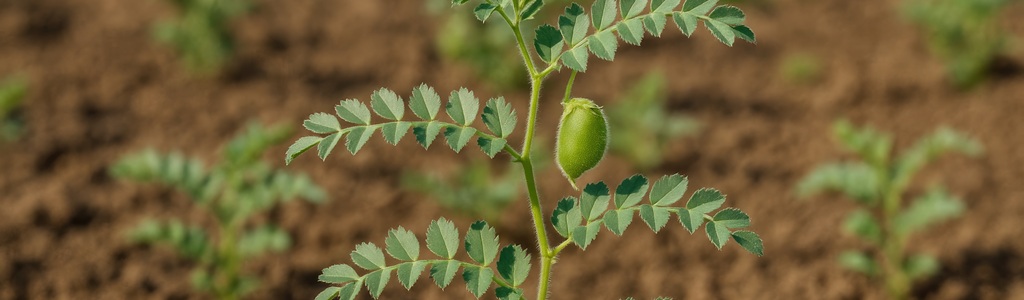
Chickpea (Cicer arietinum L.)
Global Research Experiences
Harnessing genetic diversity for groundnuts and Chickpea to accelerate the development of improved and nutritionally superior groundnut and Chickpea genotypes for enhanced food security, safety, and incomes in the drylands of Africa
- Mentor Professor: Prof. Paul K. Kimurto, PhD
- Graduate Mentors: Tracy Jayo-PhD student-Crop Protection (Groundnuts), Ben Ombogi-Msc Student –Crop protection (Groundnuts), Ruth Muriuki-PhD student Agronomy (Chickpea), James Mugo-Msc student-Agronomy (Pigeon peas), Simon Kimisoi-PhD student soil science & Chief Technologist-Soil Scientists
Student 1
Focusing on groundnuts on phenotyping and Genotyping 150 lines for yield, drought, aflatoxin resistance. Improved varieties can be achieved faster by precise phenotyping together with high-throughput genotyping deployed to identify diagnostic markers for molecular breeding (Agarwal et al. 2018). In addition, the use of modern genomic technology is likely to help in improved understanding and efficient breeding for tolerance to abiotic and biotic stresses. The student will work on this hypothesis using three experiments: Field trials in the lab and also field in Koibatek to phenotype traits of interest mainly agronomic and physiological. Expt 2 will be in Microbiology lab to analysis VIT E, Aflatoxin levels and also Stilbenes to assess correlation of these factors to aflatoxin resistance. biocontrol agents (Aflasafe and Tricoderma treated samples will be collected to assess the Host plant resistance and the level of efficacy of the biocontrol agents against Aspergillus spp. In Expt 3, in ILRI, few selected genotypes will be genotyped with SSR markers and bioinformatics tools to determine QTLs and association mapping for beneficial traits.
Student 2
Will focus on chickpea (Cicer arietinum L.) working with 50 line of the two main types, Desi and Kabuli. This will be done in three Expts: Expt 1 will be field screening to assess diversity in greenhouse for drought and heat under varying moisture conditions, with field data (trial already established in Koibatek). Expt 2 will be analysis of nutritional profiles of the selected genotypes and their contribution to human health. Expt 3 will be done at ILRI, few selected genotypes will be genotyped with SSR markers and bioinformatics tools to determine QTLs and association mapping for beneficial traits.
Research Questions
Student 1
- What is the genetic variation/diversity among the groundnuts genotypes for resistance to Aflatoxin contamination? Can phenotyping in the field and microbiology lab and genotyping at ILRI Molecular Lab identify QTLs associated with some resistance?
- What is the concentration level oils, phenolics, phenols, phytoalexins, and antifungal proteins in the selected genotypes? What is the relationship between phytoalexins controlled by Vitamin E and Stilbenes with reduced aflatoxin contamination in diverse groundnut genotypes? Analysis of Vit E using HPLC can provide possible evidence of resistance?
- Can biocontrol agents like Aflasafe and Tricoderma contribute to Host plant resistance and what is the efficacy biocontrol agents against Aspergillus spp?
- What the new products from this study be promoted as Entrepreneurship and innovative products for commercialization and what are the potential pathway for promotion for human health, Environment and also incomes?
Student 2
- What are the physiological responses of the chickpea to heat and drought stress under varying regimes?
- What are the level nutritional profiles of the selected genotypes and what is their contribution to human health?
- Are there QTLs associated with desirable/and or undesirable traits (maturity, yield, nutritional profile, AB) present and useful in Breeding?
- What the new products from this study be promoted as entrepreneurship and innovative products for commercialization and what are the potential pathway for promotion for human health, environment and also incomes?