
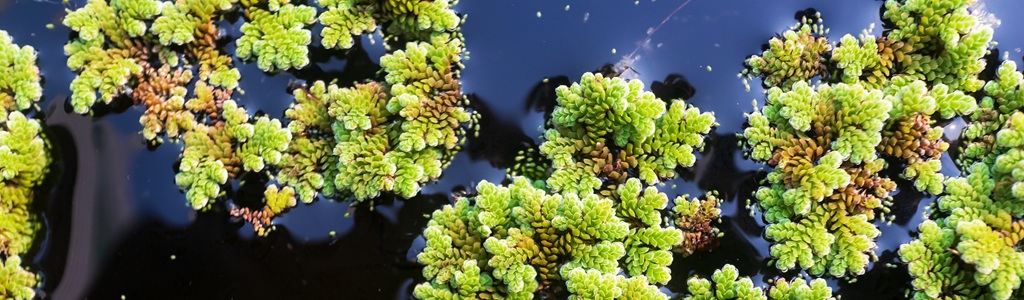
Feathered Mosquito Fern (Azolla pinnata)
Global Research Experiences
Underutilized Water-based Plants for Food Security
- Mentor Professor: Elick O. Otachi, PhD
- Graduate Mentors: Kavin Otieno and Peter Opunyo
- Location: Egerton University, Kenya
- Contact: elick.otachi@egerton.ac.ke | +254 704.388.481
- Student Mentors: Alex Mecha and Chrisantus Kimaiga
Topic 1: The potential utilization of the Feathered mosquito fern Azolla spp for fish feed in Kenya
The Feathered Mosquito fern (Azolla pinnata), a freshwater fern is considered as one of the world’s fastest-growing aquatic plant/macrophytes (Collinson et al., 2010). Under ideal conditions it grows exponentially and doubles in biomass every three days (Arora et al. 2022). It is synonymously called a green gold due to its high nutritive value. Proteins (ranging from 25-35% on a dry weight basis), vitamins, probiotics and other essential minerals like iron, calcium, magnesium, potassium, phosphorus, manganese among others are abundantly present in Azolla which makes it a suitable substitute for livestock feed (Pillai et al., 2002). It also has a potential use as a biofertilizer due its excellent nitrogen sequestration, in a bio-based economy for economic and environmental sustainability.
Research Questions
- What is the proximate composition and minerals in Azolla spp grown under different systems and conditions?
- Which new adaptable culture systems can be developed?
- Which molecular tools can be used including biomarkers in identification of the strains and possibly identify the gene response for the fast growth rate of the Azolla (ICIPE)?
- Which formulations are suitable for the commonly cultured fish species such as Nile tilapia Oreochromis niloticus and The Sharptooth catfish (Clarias gariepinus)?
Activities
- Sample Azolla spp from different farms/water bodies
- Identify the culture systems used in different farms
- Determine the proximate composition and minerals in Azolla spp (Egerton)
- Determine the different species/strains of Azolla spp using molecular tools (ICIPE)
- Determine the adaptive formulations of fish feed using Azolla as one of the ingredients
Topic 2: The potential utilization of Spirulina (Athrospira platensis) for fish feed in Kenya
Athrospira platensis is an underutilized highly nutritious macro-algae in African with high potential to improve livelihood and business venture. The algae has in recent years gained interest in both developing and developed countries due to its high nutritional value. It has protein content of 55-70%, which is 20 times more protein than soybeans and 40 times more than corn per acre (Piccolo 2012). Spirulina has a long history of its use as human food (Habib et al. 2008). Spirulina also provides a futuristic basic business model for entrepreneurship (Piccolo 2012).
Research Questions
- What is the proximate composition and minerals in Spirulina grown under different systems and conditions?
- Which new adaptable culture systems can be developed?
- Which molecular tools can be used including biomarkers in identification of the strains and possibly identify the gene response for the fast growth rate of the Spirulina (ICIPE)?
- Which formulations are suitable for the commonly cultured fish species such as Nile tilapia Oreochromis niloticus and The Sharptooth catfish Clarias gariepinus?
Activities
- Sample Spirulina spp from different farms/water bodies
- Identify the culture systems used in different farms
- Determine the proximate composition and minerals in Spirullina spp from different farms (Egerton)
- Determine the different strains of Spirullina spp using molecular tools (ICIPE)
- Determine the adaptive formulations of fish feed using Spirullina as one of the ingredients