
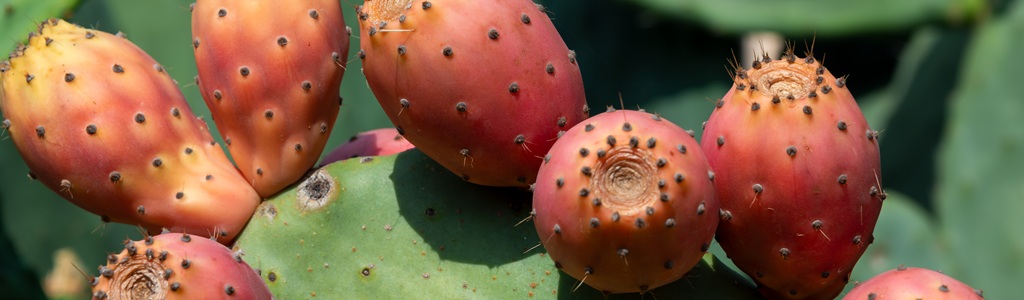
Opuntia spp.
Global Research Experiences
Revitalizing Underutilized Crops and Plants for Food Security
- Mentor Professor: Erick Cheruiyot
- Graduate Mentors: Kavin Otieno and Peter Opunyo
- Location: Egerton University, Kenya
- Contact: echeruiyot@egerton.ac.ke
Food insecurity is prevalent in Kenya (FAO AUC, ECA, and WFP 2023), a situation partly occasioned by perennial reliance on a few food crops despite nature’s diversity. The situation is confounded by expansive arid and semi-arid land (ASAL), which covers 80% of the country, making food production challenging. The ASAL of Kenya receives 300-600 mm of rainfall, which is occasionally erratic. Amid this, and given that Kenya’s agriculture is largely rainfed, food crops that can survive high moisture deficit can provide food and livelihood to most Kenyans. Among the suitable, yet underutilized crops are lentil, grass pea, and opuntia. Research into the utilization, adaptability, and integration of these crops into mainstream cultivation is needed.
Topic 1: The nutritional value of Opuntia (Opuntia spp) Ecotypes in Laikipia and Baringo Counties in Kenya
Opuntia is an invasive weed in dry areas, but with potential to provide both food and feed. The Cladodes or Pads and the fruits can be consumed as food and feed. They are rich in nutrients and could provide some health benefits. Opuntia species are diverse, but Opuntia fiscus-indica is of economic importance in agriculture, as it is cultivated for fruit and fodder. It would be important to assess the diversity of Opuntia in Kenya’s ASALs and profile the bioactive compounds in the fruits and cladodes, particularly polyphenols, alkaloids, and polysaccharides.
Objective
To determine the derived benefits of Opuntia sp and their diversity in ASAL ecologies
Activities
- Collect opuntia samples (cladodes and fruits) from diverse locations in Laikipia and Baringo Counties
- Do Comparative nutritional lab analysis at Egerton University
- Profile the polyphenols, alkaloids, and polysaccharides with HPLC at ICIPE/ILRI
Topic 2: Evaluating the nutritional and feed value of Grass pea (Lathyrus sativus L.) for Kenya’s Arid and semi-arid lands
Grass pea (Lathyrus sativus L.) is a highly resilient, climate-smart crop that thrives in drought, saline, and waterlogged conditions, making it vital for sustainable agriculture. The challenge is centered on reducing a neurotoxin, the β-ODAP in the seed. Several lines bred by ICARDA for low toxin are being evaluated for adaptability, low toxin levels in the seed, and the feed value of their biomass. Several lines (48) have been obtained for evaluation and adaptability to Kenya’s ASALs, particularly for feed. Superior lines will be selected based on low toxin levels and will be recommended for the Kenyan market.
Objective
To determine the feed value and the β-ODAP level of improved grass pea genotypes
Activities
- From a sample set, quantify the level of neurotoxin 3-N-oxalyl-L-2,3-diaminopropanoic acid (beta-ODAP) in both the biomass and the seed
- Quantify β-ODAP at Egerton University using Spectrophotometry (OPT Method)
- At ICIPE/ILRI, use High-Performance Liquid Chromatography (HPLC) or Liquid Chromatography-Mass Spectrometry (LCMS)